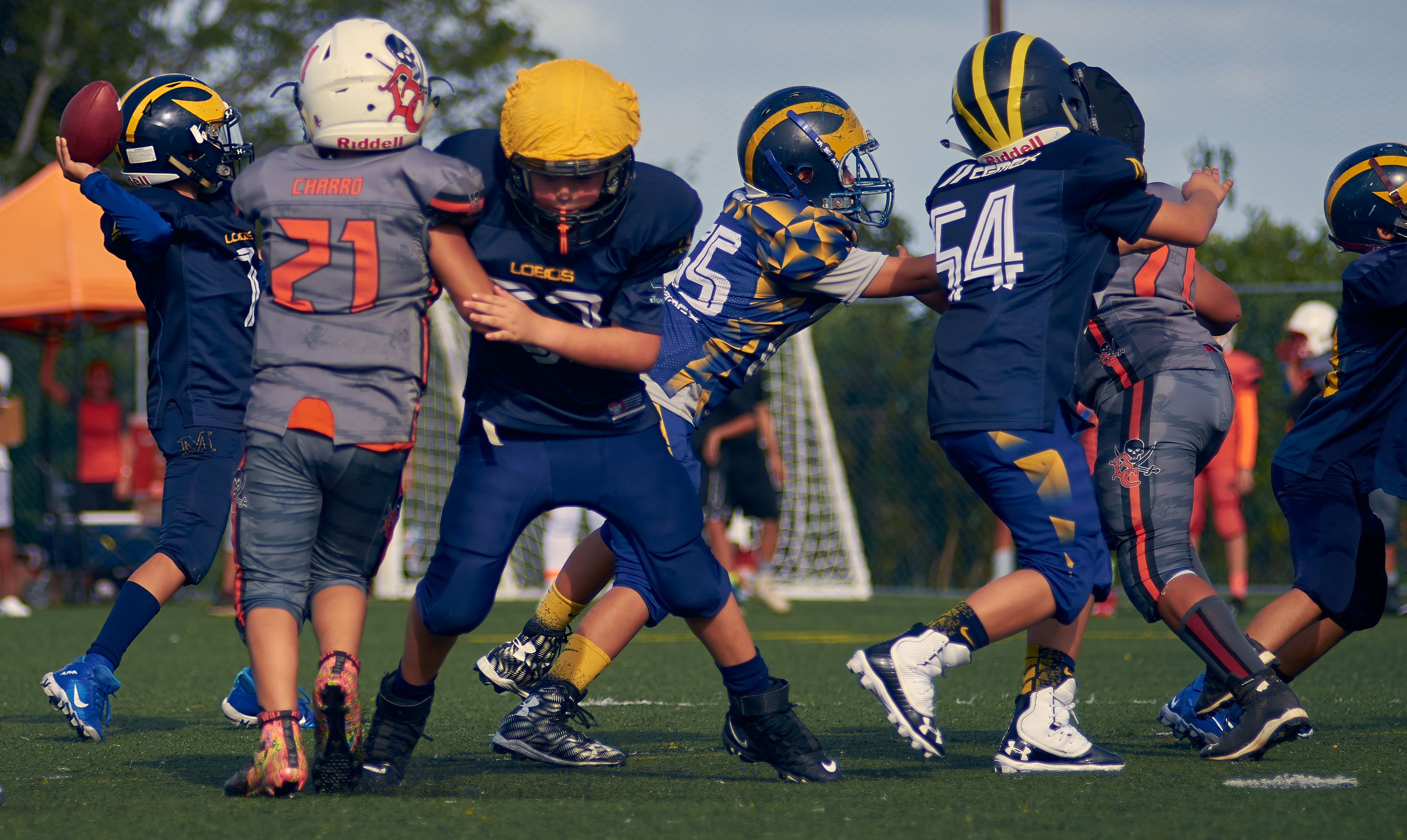
Key takeaways
The 60-second version
- 1To start a flag football league, choose ages and format, secure fields, decide on affiliation, set fees and insurance, open registration and recruit staff.
- 2NFL FLAG charges no franchise fees and becoming an operator typically takes about two weeks, while independent leagues trade brand recognition for full control.
- 3Sign field agreements and a written rainout rule before registration opens, because fields are the hardest thing to replace.
- 4Build the fee from real quotes for fields, insurance, referees and gear, then add a cushion for refunds and payment processing.
- 5Cap every division, recruit coaches from the registration form, and train referees so every game is called the same way.
To start a flag football league, choose age groups and a format, secure fields, decide on NFL FLAG affiliation, set fees and insurance, open registration, and recruit coaches and referees.
That list fits on a napkin. The work behind it does not. Here is how it usually goes for a first-time organizer: a few parents ask about flag football in a group chat, you post a sign-up form, and 60 kids register in a week. Then the school that promised you its field on Saturday mornings books it for a soccer tournament, two of your volunteer coaches back out, and you are refunding fees by hand at midnight.
None of that is unusual, and all of it is avoidable if you make the big decisions in the right order. This guide walks through those decisions for youth and adult leagues, with a budget worksheet and a season timeline you can copy.
Planning your first flag football season? Book a 30-minute Waresport demo and see registration, field schedules and parent updates for a new league set up in one place.
Decide who the league is for
Every later choice depends on this one. Write down three things before you talk to a single field owner.
- Ages or player type. Youth leagues usually split players into age divisions a couple of years wide. NFL FLAG, for example, serves girls and boys from 5 to 17. Adult leagues split by skill level, by coed or single gender, or by social versus competitive play.
- Format. Youth flag football is commonly played 5 on 5. The NFL FLAG rules describe a field 30 yards wide and 70 yards long with two 10-yard end zones, two halves, and no tackling, blocking or diving. Adult leagues often use bigger fields and more players per side, so pick a format that fits the fields you can actually get.
- Size of season one. A small first season run well beats a big one run badly. Two or three divisions with a hard cap on players are plenty for year one.
Skip the big rec league idea if you only have one coach and one field. Start with a single division, prove you can run it, and expand next season.
Run independent or join NFL FLAG
This is the decision most new organizers underestimate. You can run your own league with your own name and rules, or you can apply to become an NFL FLAG league operator.
According to NFL FLAG's start a league page, there are no franchise fees, new organizers complete a background check, and becoming an operator typically takes about two weeks. Operators get official NFL club uniforms, marketing materials, an exclusive territory and a path to regional tournaments. The page lists a core player kit at $25, which includes an NFL club uniform and flag belt, plus one football for every five players.
Here is how the two paths compare in practice:
- NFL FLAG affiliate. Families recognize the brand, jerseys carry NFL team names, and the rules are already written. In exchange, you work inside the program's rules and approval process, and the area you want may already have an operator.
- Independent league. You set the rules, the ages, the season length and the branding. You also buy your own flags, balls and jerseys, write your own rulebook and build your own reputation from zero.
Neither path is wrong. If you want a branded youth program with a ready rulebook, apply to NFL FLAG first and see what territory is open. If you want an adult social league, a church or school league, or custom rules, independent is usually simpler.
Lock in fields before anything else
Fields are the scarcest thing you will manage. Do not open registration until you have a written agreement for game days.
- Where to look. City parks and recreation departments, school districts, churches, private schools and sports complexes all rent field time. Some parks departments take permit applications months before the season, so ask early.
- What to ask. Ask which days and hours are yours, whether the field is lined or you line it, whether there are lights and restrooms, and who decides when a field is closed for rain.
- How to use space well. A flag field is smaller than a standard tackle field, so many organizers fit more than one game on a large grass area. Measure it with cones before you sign, and leave room between fields for sidelines and parents.
Get the rainout rule in writing. Who calls it, by what time, and how families hear about it are three questions that cause most game day confusion.
Set up the organization and protect it
A league collects money from families and puts kids or adults on a field. Treat it like a real organization from day one.
- Pick a structure. Many youth leagues form a nonprofit, while some adult leagues run as a small business. If you plan to seek tax exemption, the IRS explains how to apply for tax exempt status, including Form 1023 and the shorter Form 1023-EZ for 501(c)(3) organizations, both filed online at Pay.gov. Talk to an accountant or attorney in your state before you file.
- Get an EIN and a bank account. Keep league money out of your personal account, even in year one.
- Buy liability insurance. Many field owners require proof of insurance before they issue a permit. Ask your field contact what coverage they need, then get quotes.
- Collect waivers. Every player, or a parent or guardian for youth players, signs a waiver before the first practice. The free Waresport waiver generator builds a release form you can adapt and have reviewed.
- Screen volunteers. Background checks for every coach and volunteer who works with kids should be a rule, not a suggestion.
Build a startup budget and set your fee
Work backward from costs. Many first-year leagues set fees by guessing what a nearby program charges, then discover in week six that referees cost more than planned.
| Budget line | What drives the cost | Who to ask for a quote |
|---|---|---|
| Field rental or permits | Number of fields, hours per week, lights | Parks department, school district, complex manager |
| Liability insurance | Number of players, ages, league type | Sports insurance broker or your affiliation |
| Uniforms and flag belts | One set per player, plus spares | Your affiliation or a team uniform supplier |
| Footballs, cones and field paint | Number of teams and fields | Sporting goods supplier |
| Referees | Games per week, paid adults or trained teens | Local officials association or high school referees |
| Background checks | Number of coaches and volunteers | Screening provider or your affiliation |
| Awards and end of season event | Medals, trophies, a final day | Local trophy shop |
| Payment processing | Number of payments and card or bank mix | Your registration software provider |
| Contingency | Refunds, extra field time, replacements | Set aside a share of revenue |
Then do the math. Example estimate only: if your quotes add up to 9600 dollars for a 120-player season, your break-even fee is $80 per player. Add a cushion for refunds and surprises and you might land near $95. Card processing on Waresport is 3.4 percent plus $0.80 per card payment, which is about $4.03 on a $95 fee, and bank transfers by ACH cost 0.8 percent, capped at $5, as listed on the pricing page.
The free sports team budget template has a per-athlete cost and break-even calculator if you want to run your own numbers.
Want to see what your fee looks like once payments, refunds and waitlists run automatically? Book a 30-minute Waresport demo and walk through a flag football registration form built for your divisions.
Open registration with clear rules
Registration is the first moment families judge how organized your league is. Publish these before the form opens:
- Age cutoff date and how divisions are set
- Season dates, game day, practice expectations and the rainout rule
- Fee, payment deadline, sibling discount if any, and the refund policy
- Player cap for each division and what happens when it fills
Cap every division. A waitlist is a good problem. Ten extra kids with no coach and no team is not.
Ask for the details you will actually use: shirt size, school or neighborhood if you build teams that way, a parent willing to coach, and emergency contacts. Long forms slow down every family, so cut anything you will not read.
Recruit coaches and referees early
Your league is only as good as the adults on the field. Start recruiting the day you announce the season.
Coaches. Ask on the registration form whether a parent will coach or assist. Give every head coach a short packet: the rules, a sample practice plan, the season schedule and who to call when something goes wrong. A one-hour coach meeting before the first practice heads off a lot of sideline arguments.
Referees. Paid adult officials cost more but usually carry more authority with coaches. Trained high school or college players cost less and often know the game well. Either way, hold a short rules session so every game is called the same way. In youth leagues, a referee who explains calls to kids is worth more than one who knows every rule.
A season timeline you can copy
| Weeks before opening day | What to finish |
|---|---|
| 16 to 12 | Pick ages and format, decide on affiliation, start field requests |
| 12 to 10 | Sign field agreements, form the organization, open a bank account |
| 10 to 8 | Get insurance quotes, build the budget, set fees and refund rules |
| 8 to 4 | Open registration, recruit coaches and referees, order gear |
| 4 to 2 | Close registration, form teams, run background checks |
| 2 to 0 | Publish the schedule, hold the coach meeting, hand out gear |
Opening day itself deserves a plan. Put a check-in table by the parking lot, have spare flag belts and footballs, and walk the fields an hour early to place cones.
Where Waresport fits
Most new leagues start with a form, a spreadsheet and a group chat. That works for one division. By the second season, it is often the reason the organizer burns out.
Waresport puts the league side in one place. Families register and pay online, with player caps and waitlists for each division. You publish league games for every team on one calendar, and conflicts are flagged before you publish. The scheduling and league management tools push changes to families in the parent app, so a rainout message reaches everyone at once. The flag football page shows how registration, field scheduling and payments fit together for the sport.
Clubs go live in 24 hours. More than 200 clubs run on Waresport, and there is a 60-day money-back guarantee.
Here is the honest limit. Waresport does not book your fields, train your referees or ship flag belts, and it will not fix a league with no coaches. If you join NFL FLAG, ask which registration and league tools the program expects you to use before you buy anything else. And if you are running one division of 40 players for a single season, a simple form and a shared calendar may be all you need.